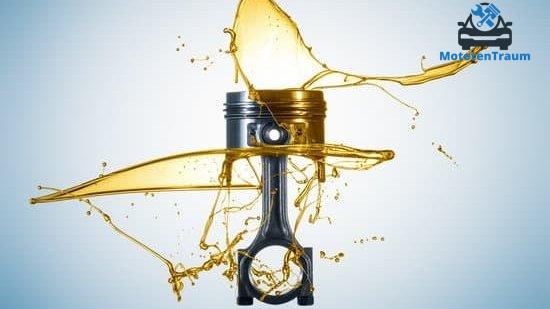
Unveiling the "Kolbenweg Im Motor": The Heartbeat of Engine Performance
When delving into the intricate world of internal combustion engines, one term consistently emerges as fundamental to power, efficiency, and longevity: the piston stroke. In German engineering vernacular, this crucial parameter is known as "Kolbenweg im Motor." While it might sound like a technical enigma, understanding the Kolbenweg is essential for anyone keen to grasp what truly drives an engine’s performance. Often simply referred to as "Hub" (stroke) in technical contexts, this 3-letter word holds immense significance, influencing everything from the roar of a sports car to the fuel economy of an everyday commuter.
The Kolbenweg, or piston stroke, isn't just a measurement; it's the very rhythm of an engine. It dictates how much air and fuel can be drawn into a cylinder, how much compression can be achieved, and ultimately, how much power can be generated. This article will demystify the Kolbenweg im Motor, exploring its definition, profound impact, calculation, and advanced optimization strategies designed to push engine efficiency and power to their absolute peak.
What Exactly is Piston Stroke?
At its core, the Kolbenweg im Motor refers to the total distance a piston travels within its cylinder from one extreme point to the other. These extreme points are known as the Top Dead Center (TDC) and Bottom Dead Center (BDC). Imagine a piston moving up and down; the stroke is the length of that complete single journey. This linear motion is then converted into rotational energy by the crankshaft, which is what ultimately drives the wheels of a vehicle.
The length of this stroke directly influences several key engine characteristics. A longer Kolbenweg means a greater volume of air and fuel can be processed per cycle, contributing to higher torque and often better fuel efficiency at lower RPMs. Conversely, a shorter Kolbenweg allows for higher engine speeds (RPMs) and typically yields more horsepower, albeit with potentially less low-end torque. Understanding this dynamic is foundational to comprehending engine design philosophies.
The Critical Role of Stroke in Engine Dynamics
The movement of the piston, governed by its stroke, is the single most defining factor in the operational mechanics of an engine. It’s not merely about displacing volume; it’s about orchestrating a symphony of events:
*
Engine Performance: A carefully calibrated Kolbenweg directly translates to optimal torque and horsepower output. It influences how quickly an engine can rev and how much force it can exert.
*
Fuel Efficiency: The efficiency of combustion is heavily dependent on the piston's travel. An optimized stroke allows for better scavenging of exhaust gases and more complete burning of the air-fuel mixture, reducing fuel consumption.
*
Emissions: Efficient combustion, facilitated by proper piston movement, minimizes unburnt hydrocarbons and other harmful emissions, making engines more environmentally friendly.
*
Engine Torque and Cylinder Filling: A longer stroke generally leads to greater engine displacement per cylinder, improving cylinder filling and thus generating more torque at lower engine speeds.
*
Lubrication and Cooling: The piston's movement impacts how engine oil is distributed and how heat is dissipated from critical components, influencing the overall thermal management of the engine.
*
Longeivity: Correctly managed piston movement, with minimized friction and optimized dead centers, reduces wear and tear on components like cylinder walls, piston rings, and connecting rods, extending the engine's lifespan.
The continuous quest for improved engine performance, reduced emissions, and enhanced durability invariably leads engineers back to the optimization of the Kolbenweg im Motor.
Beyond the Basics: Piston Stroke's Influence on Power and Efficiency
The debate between "long-stroke" and "short-stroke" engines highlights the profound impact of the Kolbenweg. A long-stroke engine, characterized by a bore (cylinder diameter) smaller than its stroke, typically excels in producing high torque at lower RPMs. This makes them ideal for applications requiring robust pulling power, like trucks or utility vehicles, and often contributes to better cruising fuel economy.
On the other hand, a short-stroke engine (bore larger than stroke) is designed for high-revving performance, generating peak horsepower at elevated RPMs. Sports cars and motorcycles often employ short-stroke designs to achieve thrilling acceleration and high top speeds. The reduced piston speed at equivalent RPMs also means less internal friction, allowing for greater reliability at high engine speeds.
Navigating the Dead Centers: TDC and BDC
The "Totpunkte" or dead centers – Top Dead Center (TDC) and Bottom Dead Center (BDC) – are pivotal points in the piston's travel. TDC is when the piston is at its highest point in the cylinder, and BDC is when it's at its lowest. These points are critical not only for defining the stroke length but also for timing key engine events:
*
Compression: Maximum compression occurs at or just after TDC.
*
Ignition: Spark plug fires precisely at or just before TDC to maximize power.
*
Valve Timing: Intake and exhaust valves open and close relative to TDC and BDC to ensure efficient gas exchange.
*
Cylinder Pressure: The highest pressures are achieved around TDC during the power stroke.
Optimizing the regions around TDC and BDC is vital. Engineers meticulously design combustion chambers and valve timing to ensure complete combustion and efficient exhaust scavenging. Slight adjustments in these areas, often influenced by the Kolbenweg, can dramatically impact an engine's output and fuel consumption. Maximizing the efficiency during these critical phases contributes significantly to reducing fuel consumption and enhancing overall engine performance. To dive deeper into how piston movement affects engine components and their long-term health, explore our article on
The Piston Stroke: Engine Performance, Efficiency, & Longevity.
Calculating and Optimizing Your Engine's Kolbenweg Im Motor
The calculation of the Kolbenweg im Motor is a fundamental step in engine design. While complex formulas are used by engineers, the basic principle relates to the engine's total displacement (Hubraum) and the number of cylinders. The stroke is intricately linked to the bore (cylinder diameter) to define the volume of each cylinder.
The Fundamentals of Stroke Calculation
Engine displacement is the total volume swept by all the pistons in one complete stroke. For a single cylinder, the swept volume is calculated using the formula for the volume of a cylinder:
Swept Volume = π * (Bore/2)^2 * Stroke
Multiplying this by the number of cylinders gives the total engine displacement. Therefore, if you know the engine's total displacement, the number of cylinders, and the bore, you can derive the Kolbenweg (stroke). This calculation is not just an academic exercise; it's fundamental for predicting an engine's characteristics, such as its torque potential and rev limit. For those interested in the practicalities of determining these vital statistics, our guide on
Calculating Piston Stroke: Boost Your Engine's Power & Life provides valuable insights.
The crankshaft's design is paramount here, as it dictates the stroke length. The distance from the center of the crankshaft's main journal to the center of the crank pin (the part the connecting rod attaches to) directly determines the Kolbenweg. An optimized crankshaft position ensures not only maximum power output but also minimal wear and tear, contributing significantly to engine longevity and efficiency.
Cutting-Edge Strategies for Piston Stroke Optimization
Improving engine performance through the optimization of the Kolbenweg im Motor is a sophisticated process, blending material science, advanced manufacturing, and ingenious engineering. Here are some key strategies:
1.
Bore-to-Stroke Ratio Adjustment: This is the most direct way to alter engine characteristics. Engineers carefully select ratios to achieve desired power bands, balancing torque and horsepower.
2.
Lightweight Piston and Connecting Rod Materials: Reducing the mass of the reciprocating components (pistons, connecting rods) allows for higher engine speeds with less inertia, reducing stress on the crankshaft and other parts. Materials like forged aluminum or specialized alloys are commonly used.
3.
Low-Friction Coatings: Applying advanced coatings (e.g., diamond-like carbon, ceramic composites) to piston skirts and cylinder walls drastically reduces frictional losses during the piston's travel, improving efficiency and reducing wear.
4.
Variable Valve Timing (VVT) and Lift (VVL): While not directly altering the stroke, these technologies optimize the timing and duration of valve opening relative to piston position, enhancing cylinder filling and exhaust scavenging across a wide range of RPMs, effectively maximizing the benefit of the existing Kolbenweg.
5.
Advanced Fuel Injection Systems: Direct injection and high-pressure fuel systems ensure a precise and atomized fuel delivery, optimizing combustion efficiency and directly complementing the piston's movement for maximum power delivery and reduced emissions.
6.
Combustion Chamber Design: Tailoring the shape of the combustion chamber to the piston's movement at TDC ensures a more turbulent and complete burn, extracting maximum energy from every fuel droplet.
7.
Active Balancing Systems: For larger, multi-cylinder engines, balance shafts are sometimes used to counteract the vibrations caused by the piston's reciprocating motion, improving smoothness and reducing stress on engine components.
These optimizations collectively contribute to not only increased performance but also enhanced fuel economy and extended engine life, showcasing the multifaceted importance of perfecting the Kolbenweg im Motor.
Practical Implications and Future Trends
For the average driver, understanding the Kolbenweg translates into appreciating why different engines feel and perform differently. A truck's engine might have a long stroke for low-end grunt, while a sports car prioritizes a shorter stroke for exhilarating high-RPM power. Knowing these characteristics can help you choose a vehicle that best suits your driving needs.
Looking ahead, the drive for even greater efficiency and reduced emissions will continue to push the boundaries of piston stroke optimization. Technologies like variable compression ratio engines, which can dynamically alter the effective Kolbenweg, are already emerging, promising the best of both worlds – high torque and high power – in a single, adaptable engine. Further advancements in materials science, simulation software, and manufacturing precision will undoubtedly lead to even more sophisticated ways to harness the power of the Kolbenweg im Motor.
In conclusion, the "Kolbenweg im Motor" is far more than just the distance a piston travels. It is a foundational concept influencing every aspect of an engine's character – its power, efficiency, emissions, and longevity. From the initial design phase to advanced optimization techniques, every millimeter of the piston's journey is meticulously engineered to unlock peak performance. As engine technology evolves, the continuous pursuit of perfecting the Kolbenweg remains at the heart of innovation, promising a future of more powerful, efficient, and environmentally conscious vehicles.